A notice of assignment (NOA) is a formal written communication sent to an account debtor (typically a buyer or customer) informing them that a receivable previously owed to the original seller has been legally transferred, or assigned, to a third party. Once a valid notice of assignment is delivered, the buyer is legally obligated to redirect payment to the new assignee, such as a factoring company or lender, rather than the original seller.
The NOA is a foundational instrument in receivables financing. It creates transparency in the payment chain, ensures that cash flows to the party that financed the receivable, and establishes a legal record of the assignment that may be enforceable against third parties.
Why Customers Need Notification
The legal effect of an assignment on the account debtor depends on whether proper notice has been given. Under UCC Article 9, which governs commercial transactions in the United States including the assignment of accounts receivable, an account debtor is not required to recognize the assignment until it receives notification.
If a buyer pays the original seller after a valid assignment but before receiving an NOA, the payment is generally treated as valid discharge of the buyer’s obligation. Once an NOA has been delivered, however, any payment made to the seller rather than the factor or assignee is not a valid discharge. The buyer may be required to pay again.
This creates strong incentives for factors and lenders to deliver NOAs promptly and to ensure that the notification is clear, specific, and properly received.
What a Notice of Assignment Contains
A well-drafted notice of assignment typically includes several key elements.
It identifies the seller and the assignee, making clear who originally held the receivable and to whom payment must now be directed. It describes the receivables being assigned, either by reference to specific invoice numbers or as all present and future receivables from the seller. It provides payment instructions for the assignee, including bank account details, routing numbers, and any reference codes required to apply payment correctly.
It may also include a confirmation request, asking the account debtor to acknowledge receipt. While acknowledgment is not legally required for the notice of assignment to be effective in most jurisdictions, obtaining it creates a clear evidentiary record.
Legal Framework: UCC Article 9
In the United States, the assignment of accounts receivable is governed primarily by UCC Article 9, which is adopted in substantially similar form in all 50 states.
Perfection Through Filing
To perfect its security interest in assigned receivables against third-party creditors and the seller’s bankruptcy trustee, the assignee typically files a UCC-1 financing statement with the appropriate state authority. Perfection provides priority over other creditors who might also claim the receivables.
Validity Without Consent
UCC Article 9 makes clear that accounts receivable can be validly assigned even if the underlying contract between the seller and buyer contains an anti-assignment clause. The anti-assignment clause may constitute a breach of the contract between seller and buyer, but it does not invalidate the assignment as between the seller and the assignee.
Anti-Assignment Clauses
Many commercial contracts include provisions restricting or prohibiting assignment. While UCC Article 9 overrides these clauses for purposes of the assignment’s validity, buyers may still have contract claims against sellers who assign in violation of a contractual restriction.
Priority Rules
When multiple parties claim an interest in the same receivable, UCC Article 9 provides a priority framework. Generally, the first party to file a UCC-1 financing statement has priority over later filers. This makes timely filing critical for factors and lenders.
NOA in Disclosed vs. Confidential Factoring
The role and handling of the notice of assignment differs significantly between disclosed and confidential factoring structures.
In disclosed factoring, the buyer knows that the seller’s receivables have been assigned to a factor. The NOA is delivered openly, and the buyer is directed to pay the factor directly. This is the standard approach in most factoring transactions.
In confidential factoring, also called undisclosed or non-notification factoring, the buyer is not informed of the assignment. The factor provides financing to the seller, but the seller continues to collect payments from buyers and remits them to the factor. No notice of assignment is sent, preserving the seller’s confidentiality about its financing arrangements.
Confidential factoring requires greater trust between the factor and the seller, since the factor relies on the seller’s representations and collections rather than enforcing payment directly. It typically commands higher pricing or lower advance rates to compensate for the additional risk.
What Happens if a Buyer Pays the Wrong Party
If a buyer pays the original seller after a valid NOA has been delivered, the payment does not discharge the buyer’s obligation to the assignee. The buyer may be required to make a second payment directly to the factor or assignee. The seller who received the misdirected payment holds it in trust for the factor and is obligated to forward it.
In practice, factors include payment redirection provisions in their agreements with sellers, and some factors take additional steps such as establishing lock-box or dedicated depository accounts to ensure payments are automatically captured even if buyers ignore the notice of assignment.
When a buyer continues to pay the seller after multiple NOAs, the factor may take legal action against both the seller (for breach of the factoring agreement) and in some cases the buyer (for conversion of the factor’s property interest in the receivable).
Notice of Assignment vs. Supply Chain Finance
Supply chain finance programs operate under a fundamentally different structure than disclosed factoring, and the NOA is typically absent from SCF arrangements.
In a buyer-initiated SCF program, the buyer drives the program and approves invoices before they are made available for early payment. Because the buyer is in control of the process and is directly confirming its payment obligation, there is no need to notify the buyer of an assignment from the supplier. The payment dynamic is already transparent.
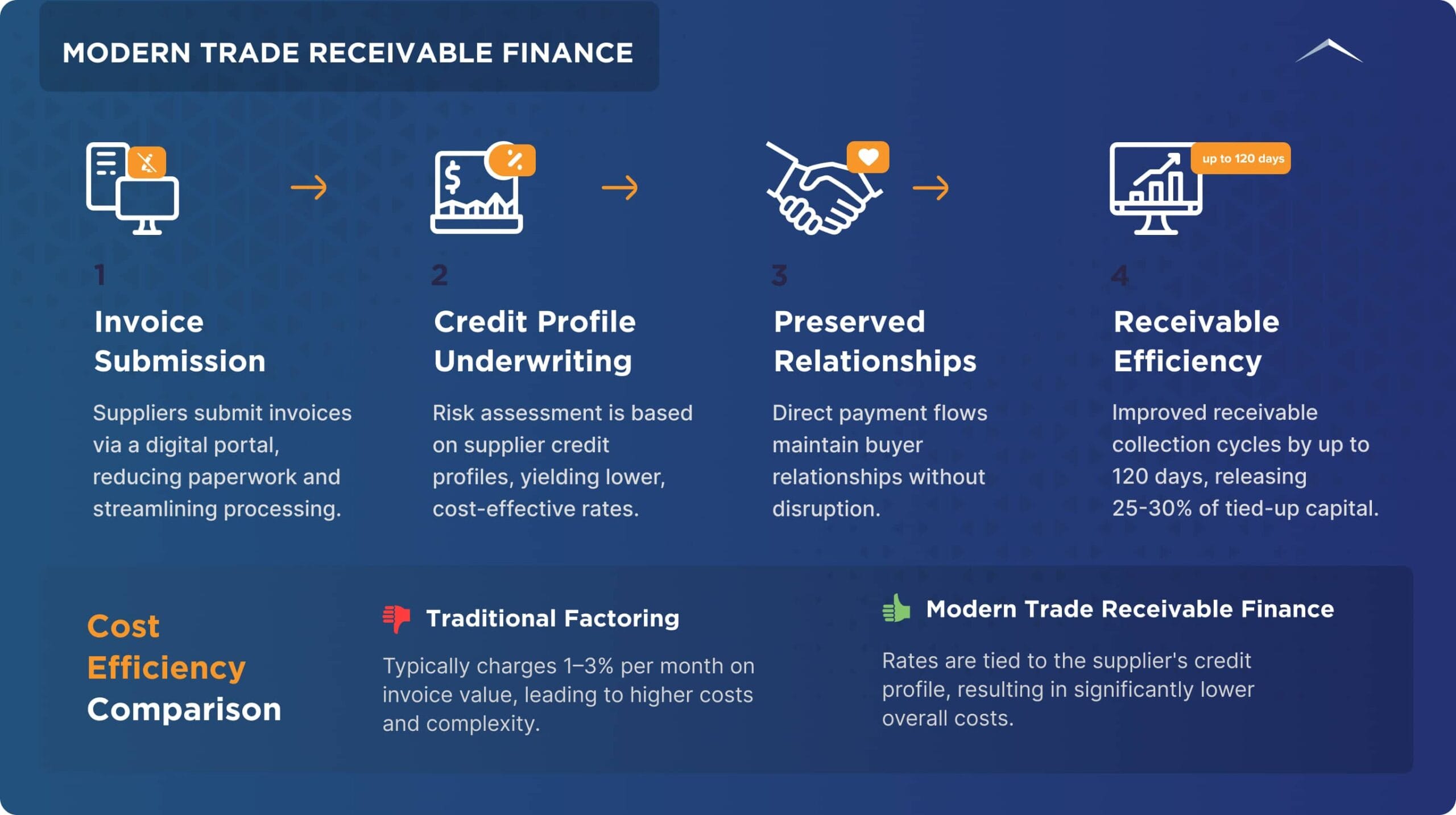
Zenith Group Advisors’ accounts payable financing program is buyer-initiated and buyer-centric. There is no assignment of receivables from supplier to a third party, no notice of assignment required, and no redirection of supplier payments. Suppliers who participate in early payment through Zenith’s program receive payment without the administrative complexity of an notice of assignment, without UCC filings against their receivables, and without any impact on their relationship with the buyer.
This is a material operational advantage over traditional factoring for suppliers who value relationship simplicity and discretion. Zenith’s program is a buyer-only facility and does not involve the purchase or assignment of accounts receivable.
Frequently Asked Questions
Is a notice of assignment legally required for a valid assignment?
Under UCC Article 9, an assignment of accounts can be valid as between the seller and assignee without notice to the buyer. However, the account debtor is not bound to pay the assignee until notice is provided.
Can a buyer refuse to honor an notice of assignment?
A buyer may claim an anti-assignment clause in its contract, but UCC Article 9 generally overrides such clauses for the purpose of the assignment’s validity in the United States. The buyer may have a contractual claim against the seller but must generally honor the assignment.
Does an notice of assignment affect the buyer-seller relationship?
An notice of assignment changes the mechanics of payment but does not change the commercial terms of the underlying contract. The buyer still owes the same amount on the same terms; only the payee changes.
What if the buyer has disputes with the seller after receiving an notice of assignment?
Under UCC Article 9, account debtors may assert against the assignee any claim or defense they have against the assignor (seller) that arose before notification of assignment. Disputes that arise after a valid NOA is delivered are subject to the terms of the factoring agreement.
IMPORTANT NOTE: Notice of assignment and factoring services are receivables-side products available to suppliers and are not offered by Zenith Group Advisors. Zenith works exclusively with buyers through an insurance-backed, unsecured accounts payable financing program.